


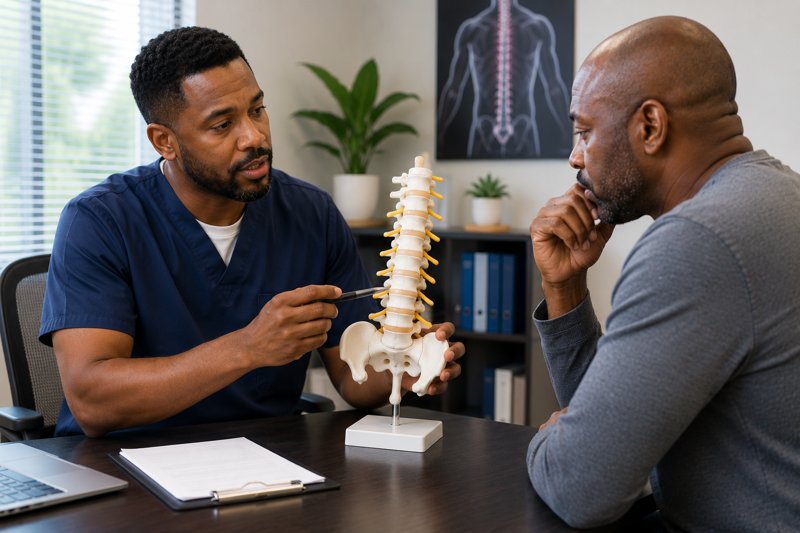
A recommendation for back surgery can feel like the end of a long road and the beginning of a frightening one. For many patients, it arrives after months or years of living with pain, and can feel like the only option left.
Surgery is a major decision, and one that deserves careful thought rather than a rushed answer. Before considering surgery, it is important to understand what is causing the pain, what treatment options are available, and whether the underlying issue has been fully evaluated. For many patients, identifying the source of the problem is an important first step in deciding what comes next.
If you’ve been told surgery is your next step, don’t feel pressured to rush into anything. The best decision starts with understanding your diagnosis, your treatment options, and whether surgery is truly necessary.
Why a Diagnosis Doesn’t Automatically Mean Surgery
MRI scans are helpful tools for understanding what may be happening inside the spine, but they do not always tell the whole story. Many people have findings such as bulging discs, bone spurs, or areas of narrowing in the spine without experiencing any symptoms. Others may have similar findings on an MRI but respond well to non-surgical approaches that address pain, mobility, and function.
This is why treatment decisions should not be based on imaging alone. A scan shows what the spine looks like, but it does not always explain why someone is hurting or how much a finding is contributing to their symptoms. A complete evaluation considers the location and pattern of pain, changes in strength or sensation, physical exam findings, daily limitations, and how symptoms respond to different treatments.
Understanding the difference between an imaging finding and the actual source of pain can help patients make more informed decisions about their care. A Gonstead chiropractor can play a role in this process by evaluating how the spine is functioning, identifying areas that may be contributing to discomfort, and helping patients understand their non-surgical care options.
A diagnosis may explain what is happening in the spine, but the next step depends on how that condition is affecting the person experiencing it.
When Surgery Is the Right Answer
There are situations where surgery can be the safest and most effective treatment. With these conditions, delaying surgery can lead to more serious complications. Surgery may be recommended right away if you have:
- Cauda Equina Syndrome: A rare condition that can cause loss of bowel or bladder control or numbness in the groin area.
- Progressive Muscle Weakness: Worsening muscle weakness caused by increasing nerve damage.
- Spinal Fractures: Breaks in the spine that affect stability.
- Tumors or Infections: Conditions that put pressure on the spinal cord or nerves.
- Severe Spinal Instability: Movement in the spine that can’t be corrected without surgery.
These problems account for only a small percentage of people with back pain. That’s why the recommendation for surgery should be paired with a clear explanation of why surgery is needed and what could happen if you wait.
What Conservative Care Can Address
Many people think conservative care simply means living with constant pain. In reality, it focuses on addressing the underlying factors contributing to discomfort, improving function, and helping patients explore non-surgical options when appropriate.
This approach can help manage a variety of back conditions. With herniated discs, the body may gradually shrink and absorb some of the displaced disc material, which can reduce pressure on nearby nerves. For sciatica, reducing inflammation and improving pressure around the sciatic nerve may help ease pain that travels through the hip, buttock, and leg.
Conditions such as spinal stenosis and degenerative disc disease can often be managed through a combination of movement, strengthening, physical therapy, and other non-surgical treatments. While these conditions involve changes to the spine that may not fully reverse, many people are able to improve function and manage symptoms without surgery. Chronic lower back pain can also respond to a personalized approach that addresses mobility, strength, and the factors contributing to discomfort.
The goal of conservative care is not to mask symptoms or wait for pain to disappear. It is to address the source of discomfort, improve how the body moves and functions, and determine the most appropriate treatment path for each patient.
Why Doctors Usually Start With the Simplest Option
If you sprain your ankle, most doctors wouldn’t recommend surgery before trying rest, physical therapy, or other treatments. The same is true for back pain. Doctors usually start with the safest treatment, and if that doesn’t work, they move to the next.
This approach has two advantages. First, it helps many people recover without surgery. Second, it preserves future treatment options if surgery is eventually needed.
Surgery permanently changes the spine, and some procedures, like spinal fusions, can affect how the joints move. The less surgical intervention the spine has undergone, the more options remain available if additional problems develop later. Conservative care is about making sure that surgery is the right next step.
What Questions to Ask Before Saying Yes to Surgery
A good surgeon should be able to explain why it’s the best option and what you can expect. If your doctor recommends back surgery, don’t be afraid to ask questions like:
- What exactly is causing my pain? Find out what in your spine is creating your symptoms.
- Have I tried all the right non-surgical treatments? In many cases, conservative care options are still available.
- What results can I realistically expect? Every procedure has different success rates, recovery times, and risks.
- Is it safe to wait, or do I need surgery now? Some spinal conditions need urgent treatment, while others allow time to explore conservative options first.
- Should I get a second opinion? Search for “back pain specialist near me” and get another provider’s opinion about your diagnosis and the proposed surgical treatment.
Get to the Right Answer for Your Situation
The decision to get back surgery isn’t as simple as looking at an MRI or X-ray. And it may not even hinge on your diagnosis. The right decision depends on what’s causing your symptoms, whether there’s any risk of permanent nerve damage, and whether appropriate non-surgical treatment has been given a fair chance.
Back surgery may be the right answer. For some spine conditions, it’s the best or only treatment. For many others, conservative care with a chiropractor for disc pain may be a wise option. The key is knowing which group you fall into.
Take the time to understand your diagnosis, ask questions, and explore your options. If surgery is the best answer, you can move forward with confidence. If it isn’t, you’ll be glad you took the time to find out.
Video

Infographic
Back surgery is a major decision that deserves careful thought, and for many patients, understanding the diagnosis and exploring non-surgical options first leads to a better outcome than rushing in. Explore things to consider before back surgery in this infographic.
